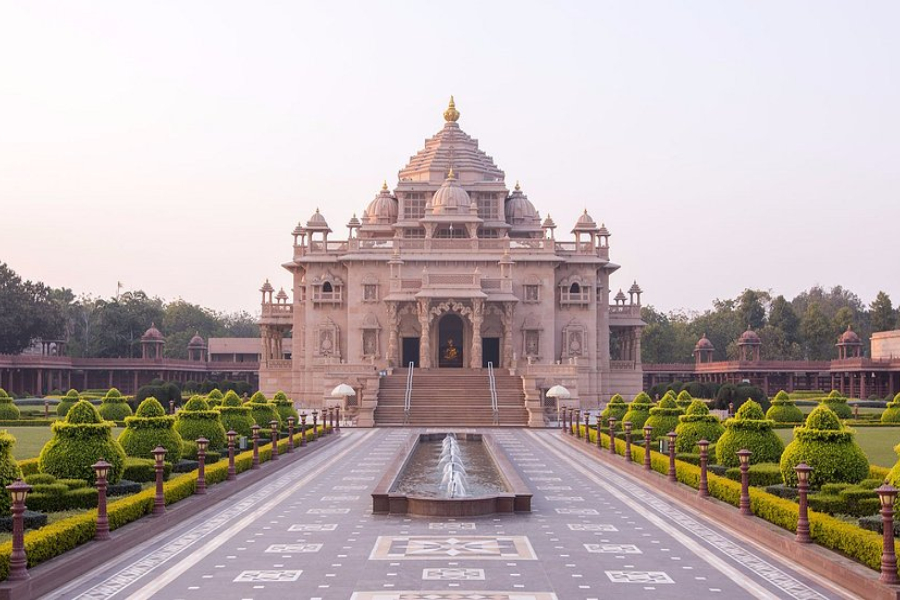
Akshardham Temple

Swaminarayan Akshardham in New Delhi epitomizes 10,000 years of Indian culture in all its breathtaking grandeur, beauty, wisdom an d bliss. It brilliantly showcases the essence of India’s ancient architecture, traditions and timeless spiritual messages. The Akshardham experience is an enlightening journey through India’s glorious art, values and contributions for the progress, happiness and harmony of mankind.

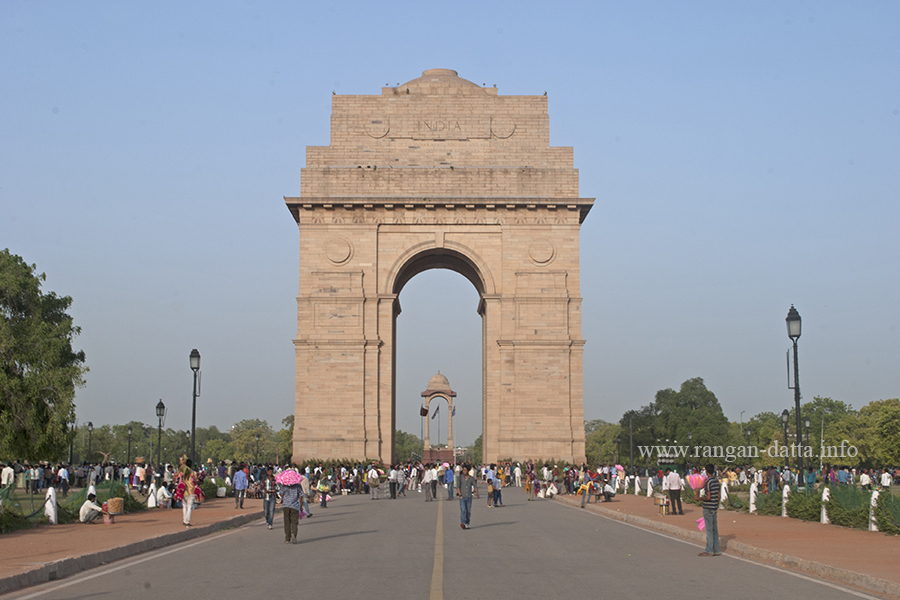
India Gate

The foundation stone of India Gate was laid by His Royal Highness, the Duke of Connaught in 1921 and it was designed by Edwin Lutyens. The monument was dedicated to the nation 10 years later by the then Viceroy, Lord Irwin. Another memorial, Amar Jawan Jyoti was added much later, after India got its independence. The eternal flame burns day and night under the arch to remind the nation of soldiers who laid down their lives in the Indo-Pakistan War of December 1971.

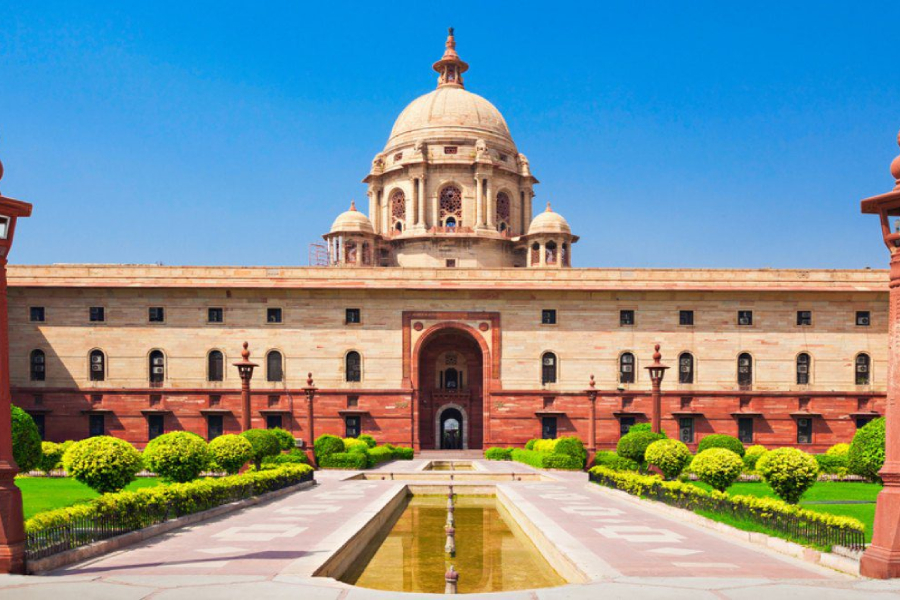
Rashtrapati Bhavan

Rashtrapati Bhavan, home to the President of the world’s largest democracy, is emblematic of Indian democracy and its secular, plural and inclusive traditions. It was designed by Sir Edwin Lutyens and Herbert Baker and stands on a 330 acre estate. It took seventeen years to build this presidential palace which was completed in the year 1929. Almost seven hundred million bricks and three million cubic feet of stone were used in building this architectural marvel that has 2.5 kilometers of corridors and 190 acres of garden area.

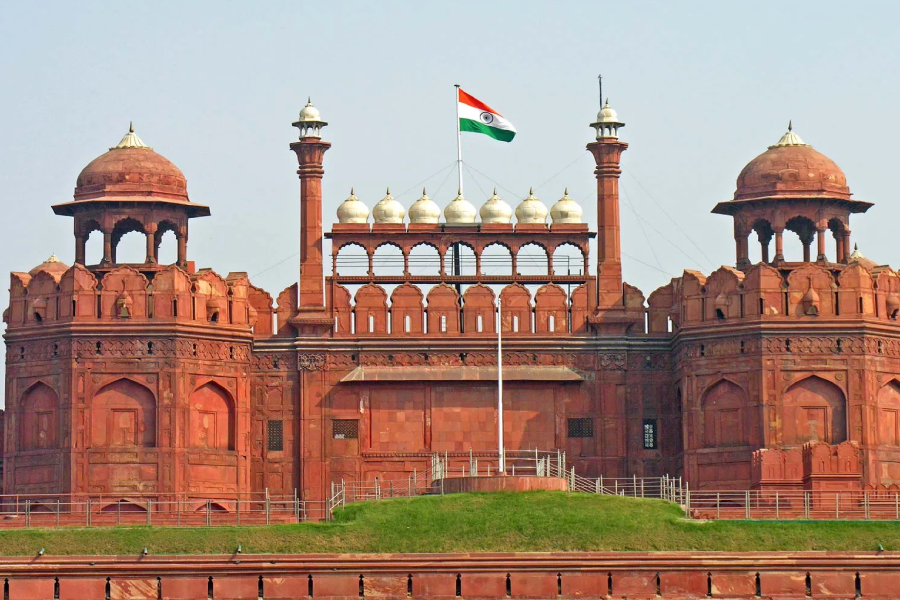
Red Fort

The Red Fort is a historic Mughal fort located in the Old Delhi area of Delhi, India. It served as the main residence of the Mughal emperors. Commissioned by Emperor Shah Jahan on the 12th of May 1639, the fort was constructed following his decision to shift the Mughal capital from Agra to Delhi.

Lotus Temple

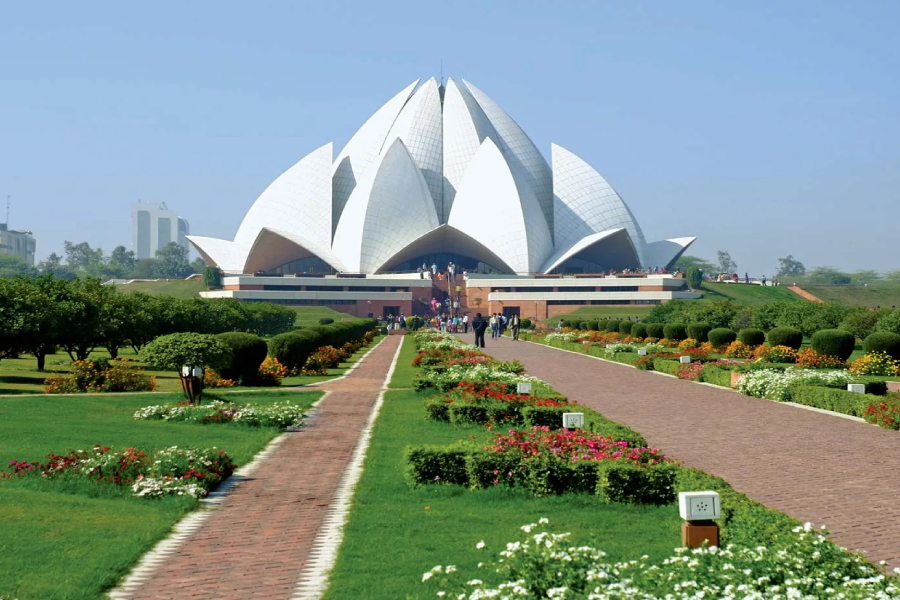
East of Nehru place, this temple is built in the shape of a lotus flower and is the last of seven Major Bahai's temples built around the world. Completed in1986 it is set among the lush green landscaped gardens. The structure is made up of pure white marble The architect Furiburz Sabha chose the lotus as the symbol common to Hinduism, Buddhism, Jainism and Islam. Adherents of any faith are free to visit the temple and pray or meditate.

Purana Quila

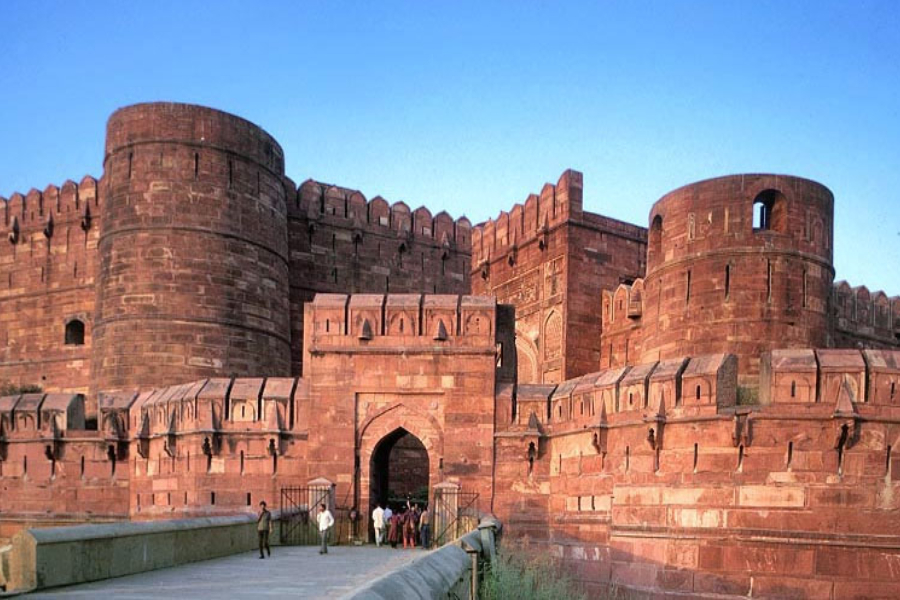
The thick ramparts crowned by merlons have three gateways provided with bastions on either side. It was surrounded by a wide moat, connected to river Yamuna, which used to flow on the east of the fort. The northern gate way, called the Talaqui darwaza or the forbidden gateway, combines the typically Islamic pointed arch with Hindu Chhatris and brackets; whereas the southern gateway called the Humayun Darwaza also had a similar plan.

Humayun's Tomb

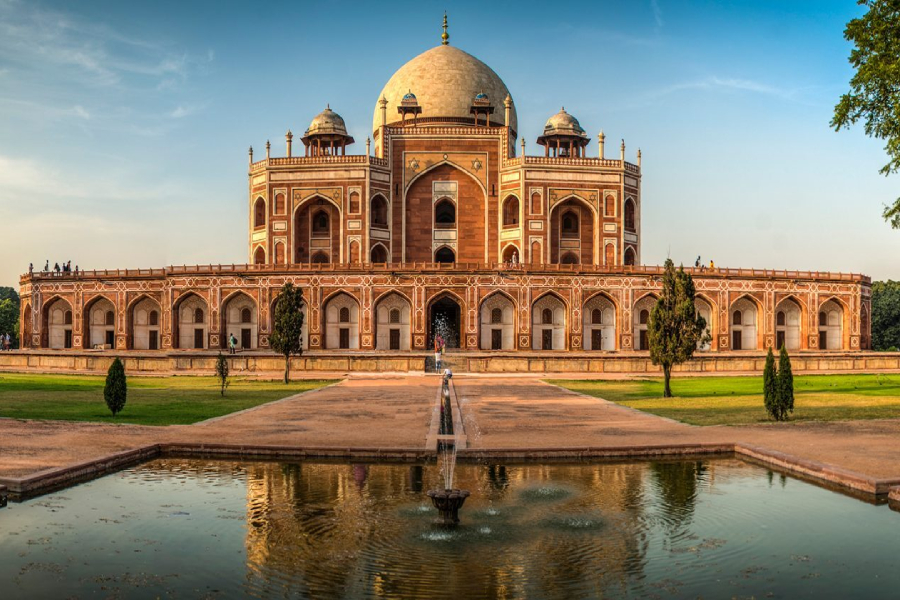
Located near the crossing of Mathura road and Lodhi road, this magnificent garden tomb is the first substantial example of Mughal architecture in India. It was built in 1565 A.D. nine years after the death of Humayun, by his senior widow Bega Begam. Inside the walled enclosure the most notable features are the garden squares (chaharbagh) with pathways water channels, centrally located well proportional mausoleum topped by double dome. There are several graves of Mughal rulers located inside the walled enclosure and from here in 1857 A.D; Lieutenant Hudson had captured the last Mughal emperor Bahadur Shah II.

Jama Masjid

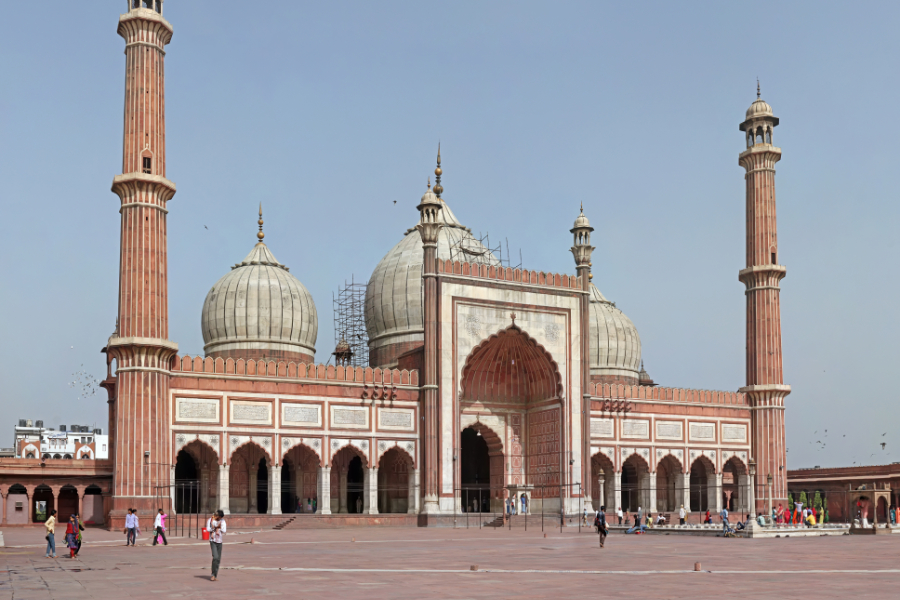
This great mosque of Old Delhi is the largest in India, with a courtyard capable of holding 25,000 devotees. It was begun in 1644 and ended up being the final architectural extravagance of Shah Jahan, the Mughal emperor who built the Taj Mahal and the Red Fort. The highly decorative mosque has three great gates, four towers and two 40 m-high minarets constructed of strips of red sandstone and white marble. Travellers can hire robes at the northern gate. This may be the only time you get to dress like a local without feeling like an outsider so make the most of it.

Qutb Minar

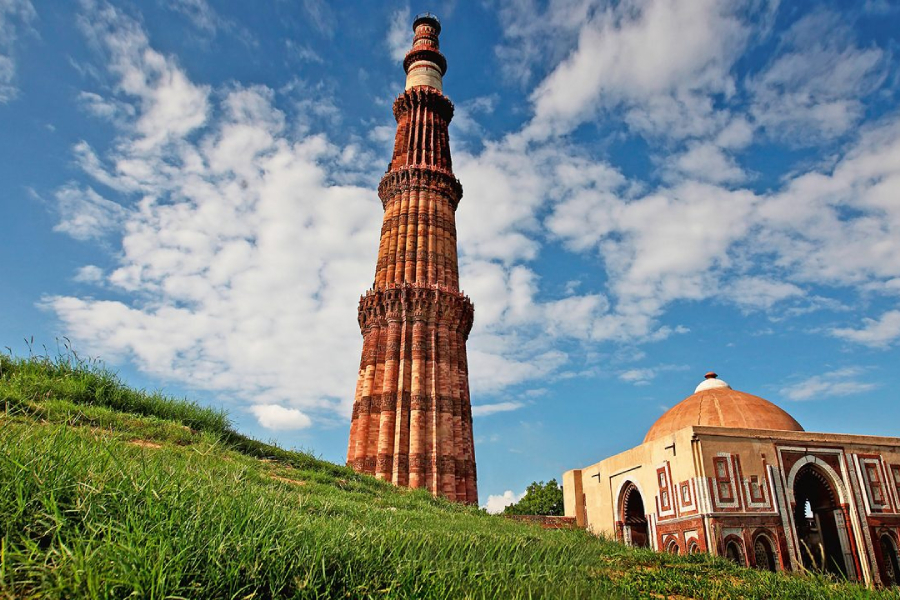
The Qutb Minar, also spelled Qutub Minar and Qutab Minar, is a minaret and victory tower, built during the Delhi sultanate, and comprising the Qutb complex, a UNESCO World Heritage Site in Mehrauli, South Delhi, India The most prominent king's tomb located within the Qutub Minar complex is that of Sultan Iltutmish (reigned 1211–1236), the third ruler of the Delhi Sultanate. Built in 1235 CE, this 13th-century mausoleum is a square red sandstone chamber, notable for its intricate carvings and early Indo-Islamic architecture, situated just northwest of the Quwwat-ul-Islam mosque

Dilli Haat - INA

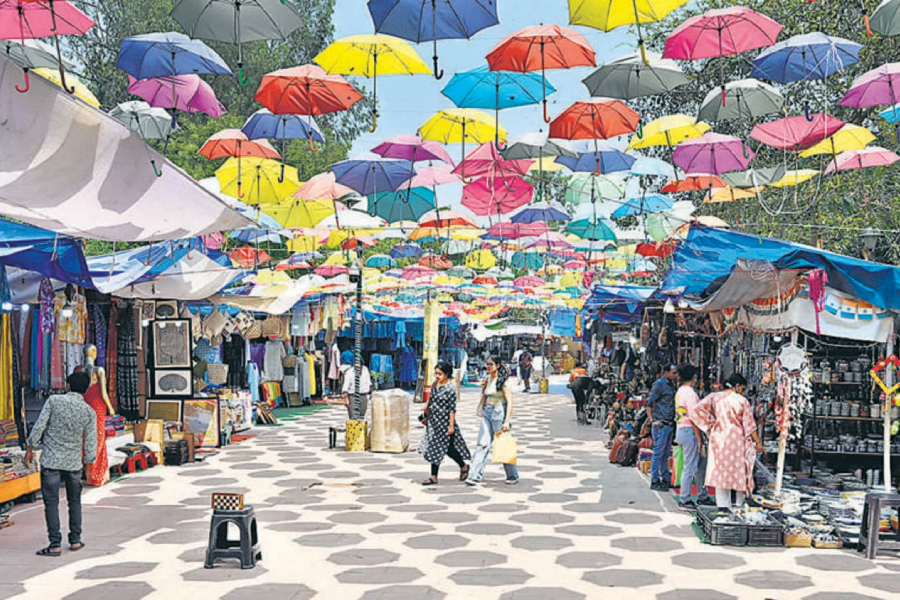
Dilli Haat INA is a famous open-air food and craft bazaar in New Delhi, managed by Delhi Tourism, renowned for showcasing authentic Indian handicrafts, textiles, and diverse regional cuisines. It serves as a "Mini India" featuring stalls from different states, offering items like sandalwood carvings, gems, and traditional food, including momos and Maharashtrian dishes.

Shri Laxmi Narayan Temple (Birla Mandir)

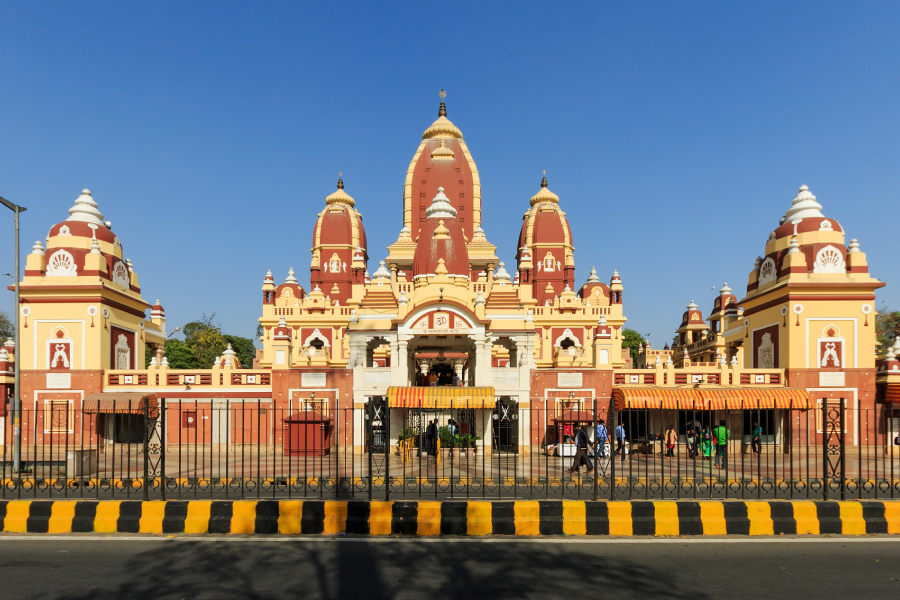
The Laxminarayan Mandir is a Hindu temple located in New Delhi, India. The presiding deity in the temple is Laxminarayan i.e., Vishnu along with his consort Lakshmi. The temple was inaugurated by Mahatma Gandhi. Gandhi ensured that members of all castes would be allowed in the temple.

Chandni Chowk

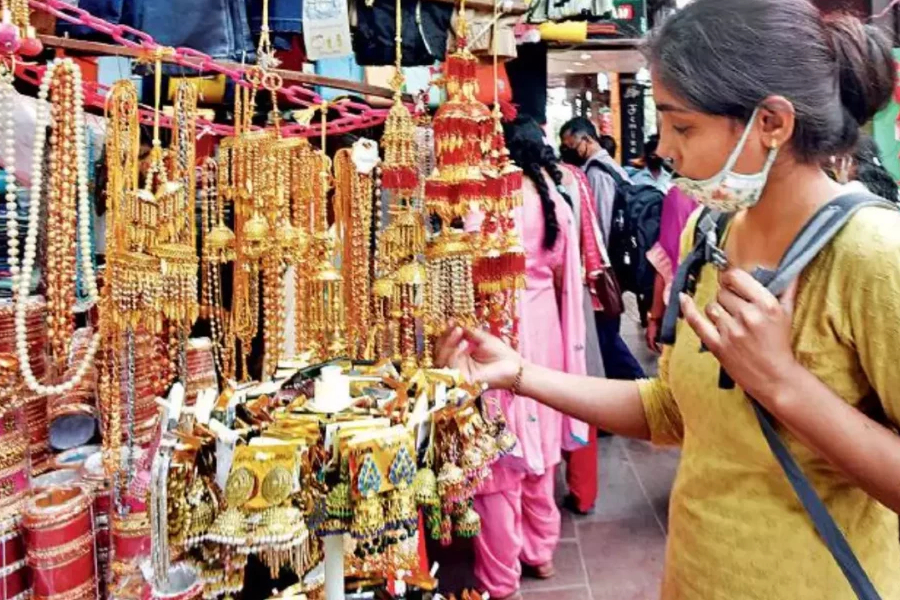
In the heart of Old Delhi, Chandni Chowk is a busy shopping area with markets full of spices, dried fruit, silver jewelry and vivid saris, while the narrow side streets are crowded with tiny shops selling essential oils, stationery and traditional Indian sweets. Nearby, the vast Mughal-era Red Fort now houses a museum complex, and the 17th-century Jama Masjid is a huge red-sandstone mosque with towering minarets

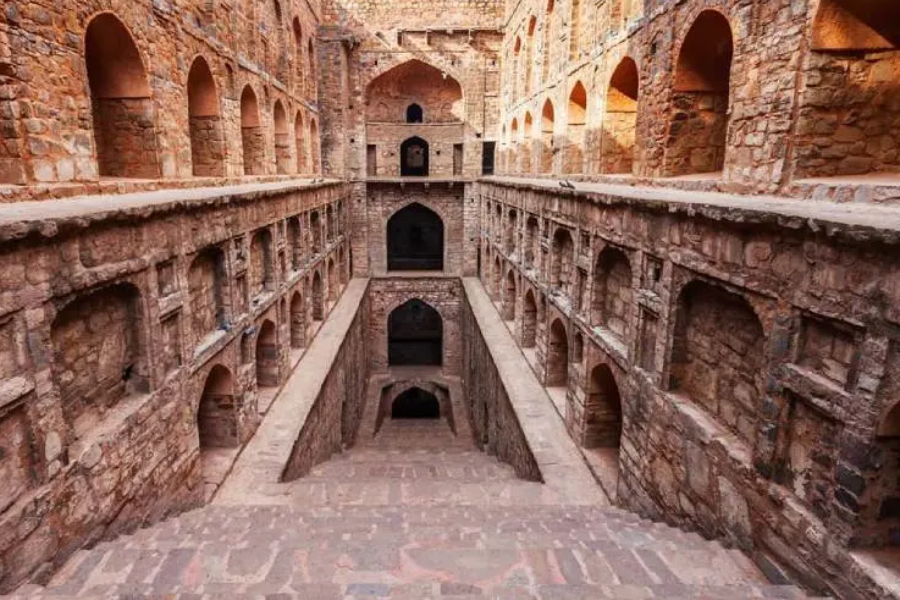
Agrasen ki Baoli

Agrasen Ki Baoli is a 60-meter long and 15-meter wide historical stepwell in New Delhi, India. Located on Hailey Road, near Connaught Place, Jantar Mantar, it was designated a protected monument by the Archaeological Survey of India under the Ancient Monuments and Archaeological Sites and Remains Act of 1958.

You can enjoy all the comforts of home in a friendly and welcoming atmosphere.

Easy Check-In